




Approaches to Specific Emergency Situations
A Multidisciplinary Approach to Specific Emergencies
In emergency medicine, every illness and injury requires its own specific time management and expertise. As the Emergency Department at Egemed Hospital, we adhere to the "Golden Hour" rule—especially during critical moments where every second counts—and follow international emergency medicine protocols. Thanks to our hospital’s strong team of physicians, our emergency department operates in full integration with the Cardiology, Neurology, Orthopedics, and General Surgery departments.
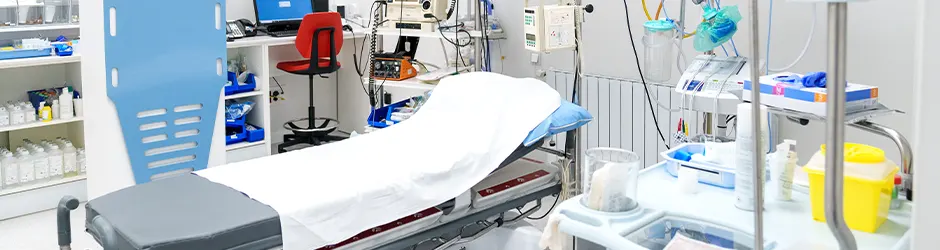
Below, our standard protocols for addressing the most common critical emergencies are detailed:
Chest Pain and Heart Attack (Myocardial Infarction)
Patients presenting with chest pain are directed straight to the "Red Zone" without being taken to the waiting room. An ECG (electrocardiogram) is performed within the first 10 minutes, and the results are immediately shared with our cardiologist. If a heart attack is diagnosed, our angiography lab is prepared within seconds, and the intervention process for the blocked artery is initiated.
Multiple Traumas and Work-Related/Traffic Accidents
In cases such as falls from a height, traffic accidents, or severe physical trauma, time is of the essence in preventing organ failure. As soon as our trauma patients arrive at the emergency department, our Orthopedic, Neurosurgery, and General Surgery teams are simultaneously summoned to the emergency room. Using our advanced CT scanner, a full-body scan is performed within seconds to rule out the risk of internal bleeding or fractures.
Suspected Stroke and Neurological Emergencies
In cases of stroke symptoms such as speech difficulties or sudden weakness, the first few hours are critical for saving brain tissue. In our emergency department, a neurological evaluation is performed promptly, and an emergency MRI or CT scan is conducted to assess blood flow to the brain. In appropriate cases, "clot-busting therapy" (thrombolytic therapy) is initiated without delay.
Pediatric Emergencies
Emergencies involving our infant and pediatric patients (such as high fever, seizures, or ingestion of a foreign object) require a different level of expertise than those involving adults. In our pediatric emergency cases, initial treatment is administered in sterile, isolated areas while taking the children’s psychological well-being into account. When necessary, our pediatricians are immediately involved in the process.