



Clinic Overview
Egemed Allergy and Immunology Center: Your Immune System Is in Safe Hands
Our immune system is a flawless and complex defense mechanism that protects our bodies against external threats such as bacteria, viruses, and toxins. However, in some cases, this system can become confused due to genetic or environmental factors, leading it to mount an excessive and debilitating response to substances that are normally harmless, such as pollen, dust mites, pet dander, or certain foods. These hypersensitivity reactions are known as "allergies. "
The Allergy and Immunology Department atEgemed Hospital serves as a multidisciplinary (multi-specialty) treatment center, providing diagnosis, treatment, and long-term follow-up for allergic diseases and immune system deficiencies in accordance with scientific standards. Our primary goal is not merely to suppress immediate symptoms, but to identify the root cause of the problem and permanently improve our patients’ quality of life.

⚠️ When Should You Contact Us?
Allergic reactions can sometimes start with a simple sneeze, but they can also progress to life-threatening conditions such as anaphylaxis (allergic shock). If you experience any of the following symptoms, you should contact our specialists immediately:
- Chronic coughing fits and shortness of breath (wheezing) that worsen at night and have an unknown cause
- A runny nose, congestion, and repeated sneezing that worsen during the spring months or in dusty environments
- Redness, watering, and severe itching in the eyes
- Sudden redness, swelling, and rashes on the skin that do not go away (hives)
- Swelling of the lips and tongue and shortness of breath after consuming a certain food or taking medication
- Severe infections that recur frequently and are difficult to treat in adults or children (suspected immunodeficiency)
Major Diseases Diagnosed and Treated in Our Department
Thanks to our hospital’s team of specialists and state-of-the-art facilities, we treat all conditions affecting the immune system—from the respiratory tract to the skin—using the latest medical advancements.
Allergic Rhinitis (Hay Fever) and Conjunctivitis
Allergic rhinitis, commonly known as hay fever, is an inflammation of the nasal lining caused by allergens inhaled through the respiratory tract, such as pollen, dust mites, or mold spores. It is often accompanied by itchy and watery eyes (allergic conjunctivitis). This condition, which significantly reduces sleep quality and daily work or school performance, is managed at our clinic through tests targeting the root cause.
Allergic Asthma
Asthma is a chronic lung disease characterized by narrowing of the airways, and allergies underlie the vast majority of cases. When exposed to an allergen, the airways constrict, leading to shortness of breath and wheezing. At our clinic, we work in full coordination with our Pulmonology department to identify the allergic basis of asthma and provide a comprehensive approach.
Hives and Atopic Dermatitis (Eczema)
Rashes that appear suddenly on the skin, move around, are red, and cause severe itching are called hives. Atopic dermatitis, on the other hand, is a chronic allergic skin condition that typically begins in childhood and is characterized by a weakened skin barrier. For such dermatological conditions, we collaborate with our Dermatology department to develop both internal and external treatment protocols.
Food, Drug, and Insect (Bee) Allergies
Foods such as cow’s milk, eggs, nuts, and seafood, as well as penicillin-class antibiotics and bee stings, are the most common allergens. These types of allergies can lead to a life-threatening condition known as “anaphylaxis” within seconds. At our clinic, these allergens are clearly identified, and we prescribe epinephrine auto-injectors to our patients along with training on how to use them in emergency situations.
Our Advanced Diagnostic Methods: How Do We Identify the Culprit?
The first step toward effective treatment is correctly identifying the culprit (allergen). The modern allergy tests performed in our department include the following:
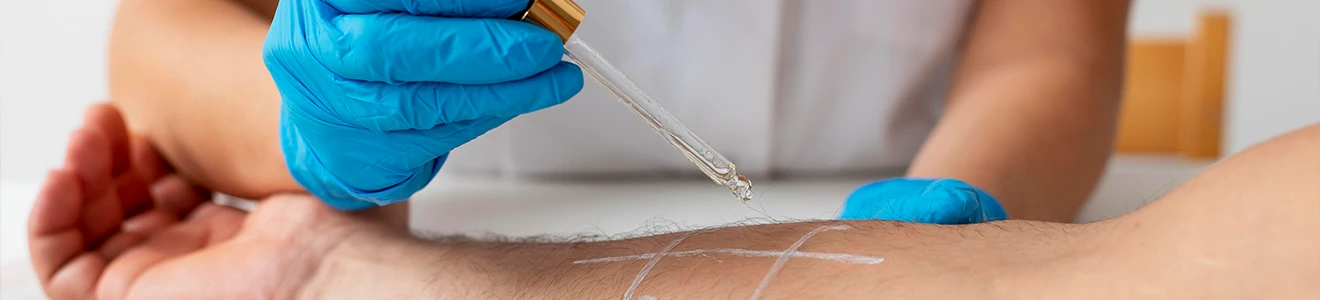
- 1. Skin Prick Test: This is the most commonly used test; it is painless and quick. It is performed by gently applying drops of solution to the skin on the forearm. Within 15–20 minutes, visible redness and swelling indicate which substance (pollen, dust mites, cat/dog dander, mold) you are allergic to.
- 2. Patch Test: A diagnostic procedure involving the application of patches to the back for 48–72 hours to identify contact allergies (contact dermatitis) caused by cosmetic products, nickel (in imitation jewelry), hair dyes, and chemicals.
- 3. Comprehensive Specific IgE Blood Tests: In cases where skin tests cannot be performed (such as when the patient is taking high doses of antihistamines or has highly reactive skin), a blood sample is taken in a laboratory setting to identify hundreds of different allergens at the molecular level.
- 4. Pulmonary Function Tests (PFTs): These are the gold standard tests for measuring lung capacity and airway narrowing in millimeters in patients suspected of having allergic asthma.
Is a Permanent Solution Possible? (Immunotherapy - Vaccine Therapy)
At Egemed Hospital, our approach to allergy management goes beyond simply relieving symptoms; we aim to help our patients achieve a state of immunity against these allergens.
Traditional medications (antihistamines, corticosteroid sprays) effectively suppress symptoms but do not completely eliminate the condition. Allergy Vaccine Therapy (Immunotherapy), which we administer to selected and suitable patients, is the only scientifically proven treatment method capable of fundamentally altering the course of allergies. The substance to which the patient is allergic is administered to the body in the form of subcutaneous injections or sublingual drops/tablets, starting with very low doses over a period of several months. In this way, the immune system develops “tolerance” to this substance and stops reacting to it.
Thanks to the strong multidisciplinary structure established by our hospital’s Pulmonology, ENT, Dermatology, and Pediatrics clinics, our team of experts is here to support you in protecting your immune health, ensuring an accurate diagnosis, and achieving complete freedom from the limiting effects of allergies.