



Treatment of Brain Tumors and Intracranial Disorders
Treatment of Brain Tumors and Intracranial Disorders
Since the volume inside the skull is fixed, any abnormal mass (tumor) developing in the brain tissue or membranes can compress the brain’s delicate structures, leading to neurological symptoms such as headaches, vision problems, seizures (epilepsy), or paralysis. In the field of neuro-oncology, our clinic’s primary goal is to treat mass lesions while preserving the brain’s functional capabilities.
[ Diagnosis and Surgical Planning ]
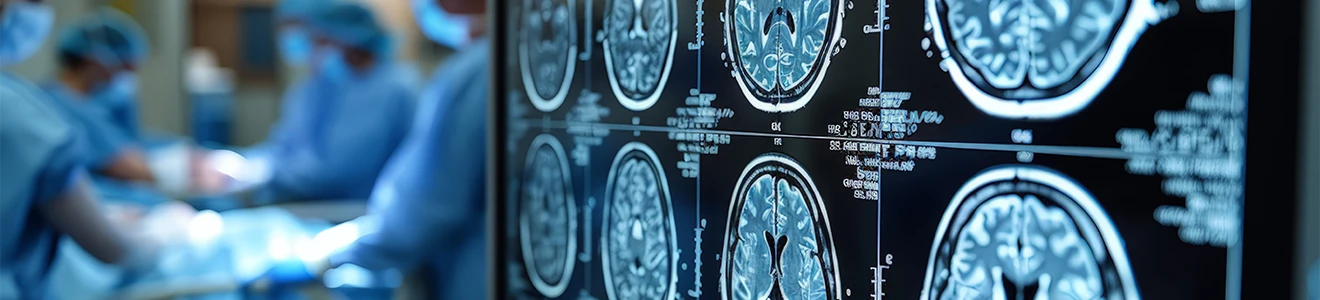
The treatment of brain tumors varies depending on whether the tumor is benign or malignant, as well as its location and size. Advanced MRI (Magnetic Resonance Imaging) scans are used to map the tumor’s proximity to specific functional areas of the brain (speech, vision, movement). Surgical decisions are made in multidisciplinary tumor boards.
[ Surgical Procedures (Microneurosurgery) ]
During surgery, advanced surgical microscopes are used to distinguish tumor tissue from healthy brain tissue. While the goal is to remove the entire tumor whenever possible, in cases where the tumor is attached to vital brain centers, the mass is reduced while maintaining a safe margin. The tissue samples (biopsies) are sent to the pathology laboratory for a definitive diagnosis, and patients are referred for oncological treatment (radiation therapy or chemotherapy) when necessary.