



Diagnosis, Imaging, and Surgical Planning
From Diagnosis to Surgical Planning: A Scientific and Transparent Journey
At the Egemed Hospitals Department of Neurosurgery, our guiding principle is: "Surgery is not always the first option." We do not recommend surgery to any of our patients without first establishing an accurate and definitive diagnosis. When you visit our clinic, we use state-of-the-art diagnostic methods to identify the root cause of your condition:
This is the most critical step in the process. Our specialist surgeon will conduct a precise examination of your reflexes, muscle strength, sensory loss, and balance while walking. Sometimes, this examination alone is enough to determine the exact level of the spinal cord where the problem lies.
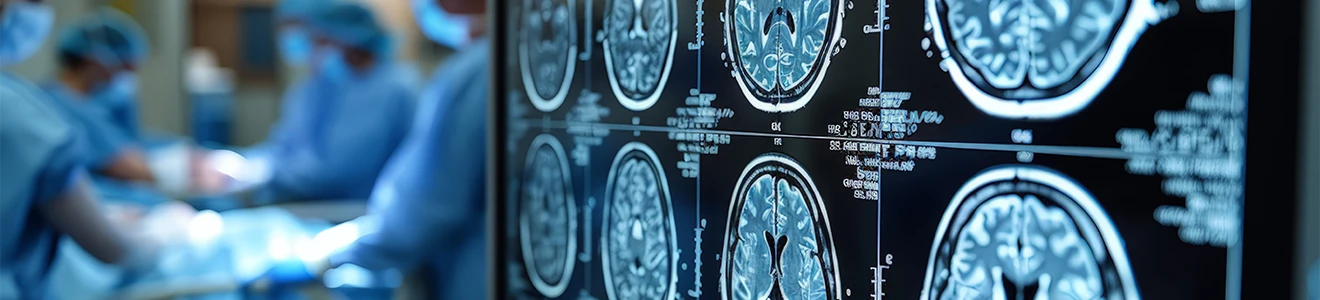
Using our high-resolution Magnetic Resonance (MR) scanners, we examine brain tissue, the spinal cord, nerve roots, and discs at the cellular level. In cases involving trauma or conditions affecting the bony structure (such as spinal stenosis), we use 3D Computed Tomography (CT) to map the skeletal system.
This is the gold standard test for measuring the extent of nerve damage and nerve conduction velocity, particularly in cases of lumbar and cervical disc herniations and nerve compression (such as carpal tunnel syndrome). It is performed in conjunction with our neurology clinic.
[ Multidisciplinary Council and Surgical Decision ]
Once all tests have been completed, your findings are reviewed in consultation with our specialists in Physical Medicine and Rehabilitation, Neurology, and Algology (Pain Management). If there is no longer a chance of recovery through medication, physical therapy, or spinal injections, a decision is made to proceed with surgery to prevent permanent nerve damage. The surgical technique, duration, materials to be used, and likelihood of success are transparently discussed with the patient and their family as part of the planning process.