



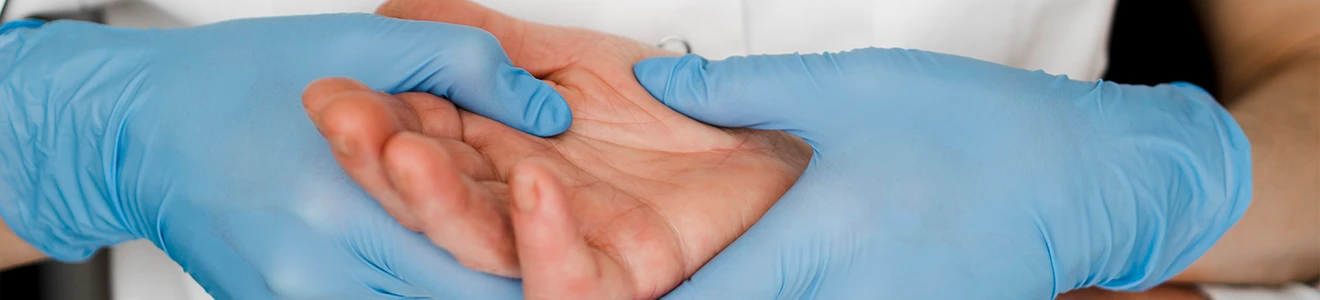
Hand Injuries and Tendon and Nerve Injuries
Medical Approach to Hand Injuries, Tendon, and Nerve Injuries
Our hands are the most active organs that connect us to the outside world in our daily lives. This active use leaves our hands vulnerable to trauma in situations such as workplace accidents, household accidents, cuts from glass or knives, crush injuries, and sports injuries. At the Egemed Hospitals Hand Surgery and Microsurgery Clinic, all types of trauma involving the hand’s complex anatomy (muscles, tendons, blood vessels, nerves)—whether resulting in tissue loss or not—are treated using modern surgical techniques.

Tendon Lacerations and Repair
Tendons are white, cord-like, tough tissues that attach muscles to bones and allow our fingers to bend and straighten. When tendons are damaged in a deep laceration, the fingers lose all ability to move.
- Flexor and Extensor Tendons: Repair of both tendon groups requires specialized expertise. The torn ends are located under a surgical microscope and sutured together with appropriate tension.
- Early Intervention: In cases of tendon lacerations, performing surgical repair without delay is crucial to prevent the tendons from shortening and retracting into the muscle.
Nerve Transections and Microsurgery
The nerves in the hand (the median, ulnar, and radial nerves) provide our sense of touch and send motor signals to the small muscles. When a nerve is severed due to a cut or crush injury, numbness and muscle wasting (atrophy) begin in that area.
- Nerve Repair: Nerve tissue is even thinner than a strand of hair. Severed nerve sheaths (epineurium) are repaired using very fine sutures under a microscope.
- Nerve Grafting: If there is a defect (gap) in the nerve tissue resulting from an injury, a sensory nerve graft taken from another area of the leg or arm is transplanted to this site to bridge the gap. The process of the nerve ends connecting and healing is a slow process that takes months (approximately 1 mm per day).